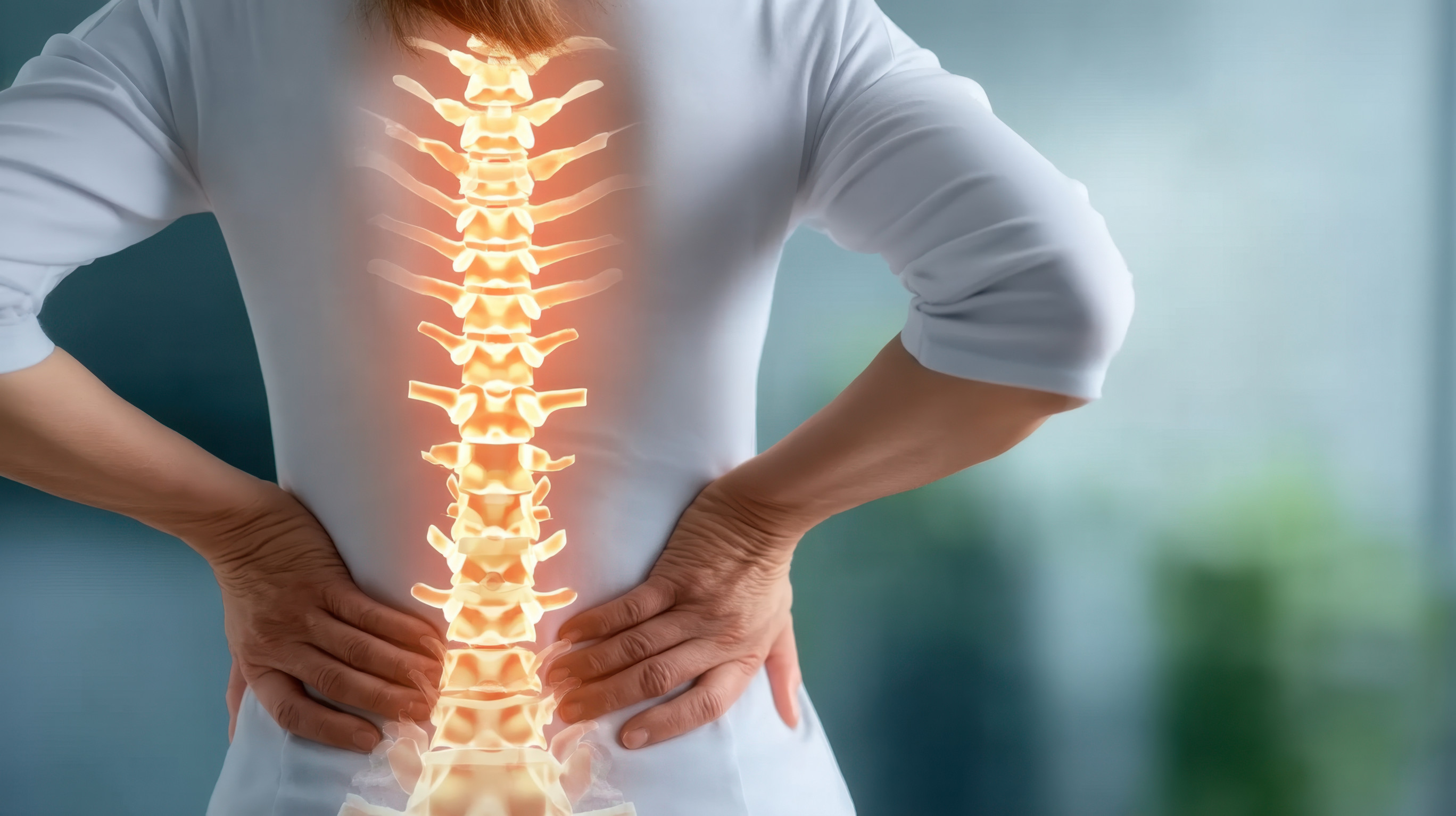
Back pain is one of the most common reasons people seek medical care. The spine is a complex structure of vertebrae, discs, nerves, and muscles—understanding your pain is the first step toward lasting relief.
The spine consists of 33 vertebrae divided into regions, connected by intervertebral discs that act as shock absorbers. Small facet joints guide movement, while the spinal cord runs through the spinal canal, sending nerves to every part of the body.
Your lower back (lumbar spine) bears the majority of your body weight and allows the most movement, making it the most common site of back pain and injury.
The spine is an engineering marvel—but it was designed for movement, not prolonged sitting. Strengthening your core is the single best thing you can do to protect your back.
Back pain can result from muscle strain, structural problems, arthritis, and nerve compression. Identifying the root cause is essential for effective treatment.
The gel-like center of a disc pushes through the outer ring, potentially pressing on spinal nerves. Causes radiating pain, numbness, or weakness in the legs.
Common cause of sciaticaNarrowing of the spinal canal, often from arthritis or bone spurs. Causes leg pain with walking that improves with sitting or bending forward.
Age-relatedThe most common cause of acute back pain. Results from lifting, twisting, or poor posture. Usually resolves within days to weeks with conservative care.
Most common causeAge-related wear and tear on intervertebral discs. Causes stiffness and pain with certain movements. Very common on imaging but doesn't always cause symptoms.
Wear and tearPain radiating along the sciatic nerve from the lower back through the hip and down the leg. Usually caused by a herniated disc or bone spur compressing the nerve.
Nerve compressionA vertebra slips forward over the one below it, causing lower back pain and sometimes nerve compression. Can be from stress fractures or degenerative changes.
StructuralLost work days per year due to back pain
of back pain episodes resolve within 6 weeks
Annual US healthcare cost for back pain
Where you feel back pain provides important clues about its underlying cause. Use this guide to identify your symptoms and understand what may be happening.
Muscle tension, poor posture, thoracic disc herniation, or compression fractures. Often associated with desk work, rounded shoulders, and stress.
The most common site of back pain. Muscle strain, disc herniation, facet joint arthritis, spinal stenosis, or degenerative disc disease.
Sharp, shooting pain from the lower back through the hip and down one leg. Numbness, tingling, or weakness may accompany the pain.
Pain at the base of the spine where it connects to the pelvis. Often felt in the low back, buttock, or hip on one side. Common in pregnancy.
Localized pain suggests a specific structural cause. Widespread stiffness and aching may indicate muscle tension, fibromyalgia, or inflammatory conditions.
A proper diagnosis combines physical examination, medical history, and often imaging. Your doctor will tailor the workup based on your specific symptoms and red flags.
Checking range of motion, reflexes, nerve function, and reproducing pain patterns
When pain started, triggers, previous injuries, work demands, and activity level
X-rays for bone alignment; MRI for discs, nerves, and soft tissue; CT for detailed bone structure
EMG and nerve conduction studies to evaluate nerve damage and pinpoint compression sites
Most back pain improves with conservative treatment within 4-6 weeks. Surgery is rarely needed and typically reserved for progressive neurological symptoms or failed conservative care.
Bed rest is not recommended for most back pain. Gentle activity promotes healing, keeps muscles from stiffening, and prevents deconditioning. Walking, swimming, and light stretching are ideal starting points.
Core strengthening, flexibility training, and posture correction form the foundation of back pain treatment. A physical therapist creates a customized program targeting your specific condition and movement patterns.
NSAIDs (ibuprofen, naproxen) for short-term use reduce inflammation and pain. Acetaminophen for those who can't take NSAIDs. Ice for acute injury (first 48 hours), heat for chronic pain and muscle stiffness.
Massage therapy helps relieve muscle-related back pain and promotes relaxation. Ergonomic workstation adjustments—proper chair height, monitor position, and standing breaks—address a major contributing factor to chronic back pain.
Anti-inflammatory medication injected near the compressed nerve root. Provides targeted relief for radicular pain (sciatica) from disc herniation or spinal stenosis. Effects can last weeks to months.
Facet joint injections: Diagnostic and therapeutic for arthritis of the small joints connecting vertebrae. Helps confirm the pain source.
SI joint injections: For sacroiliac joint dysfunction causing low back and buttock pain. Often followed by radiofrequency ablation for longer-term relief by interrupting pain signals.
Minimally invasive removal of herniated disc material pressing on a nerve. High success rate for relieving sciatica. Recovery is typically 4-6 weeks with most patients returning to normal activities.
Laminectomy: Removes bone and tissue to create more space in the spinal canal, relieving pressure on nerves. Primary treatment for spinal stenosis.
Spinal fusion: Permanently joins two or more vertebrae. For instability, severe arthritis, or spondylolisthesis. Disc replacement is an alternative that preserves motion for select patients.
Core stability is crucial for back health. Strengthening the muscles that support your spine—including the deep stabilizers and abdominals—is the foundation of recovery and prevention.
These exercises should not cause pain. Stop if symptoms worsen, and consult a physical therapist for a personalized program.
Swimming, water aerobics, walking, and stationary cycling provide cardiovascular benefits without stressing your spine. Water-based exercises are especially beneficial as buoyancy supports your body weight.
Aim for 30 minutes, 5 days a week. Start slow and gradually increase duration. Yoga and tai chi also improve flexibility, balance, and core strength.
Proactive steps can significantly reduce your risk of back pain and protect your spine for the long term.
Strong core and back muscles protect the spine. Focus on exercises that build stability without excessive loading.
Excess weight places additional stress on the lower back. Even modest weight loss reduces spinal load significantly.
Whether sitting, standing, or lifting. Maintain the natural curve of your spine. Use lumbar support when seated.
Bend at the knees, keep the object close to your body, and never twist while lifting. Use your legs, not your back.
Stand and move every 30-60 minutes if you sit for work. Prolonged sitting is one of the top contributors to back pain.
Side sleeping with a pillow between your knees, or back sleeping with a pillow under your knees, supports spinal alignment.
While most back pain improves with self-care, you should see a healthcare provider if you experience any of the following:
Recent research, news, and expert insights about back pain treatments and spine health advances.